By the time I left Argentina, I didn't have to introduce myself.
Invited to teach at schools, universities and events with audiences of up to a thousand people. Invited onto the country's largest television channels, radio stations and newspapers.
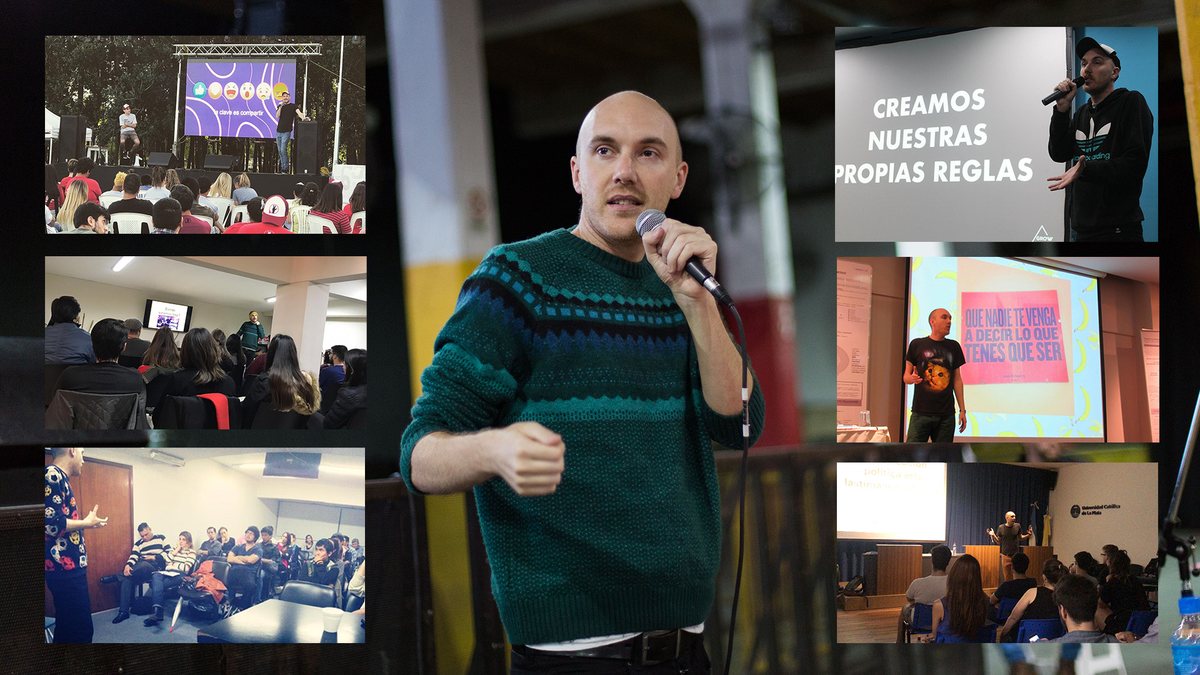
Universities in La Plata, Palermo and Santa Fe. An innovation summit in Mar del Plata. Argentina Game Show. A technology education institute. A national foundation. Each one was an institution deciding that the digital subject it needed taught was not covered by the people already on its payroll — and deciding who to bring in instead.
That is the credential that matters here. Not that I can hold a room; anyone who teaches for fifteen years can hold a room. It is that the choosing kept happening, and kept landing on the same person.
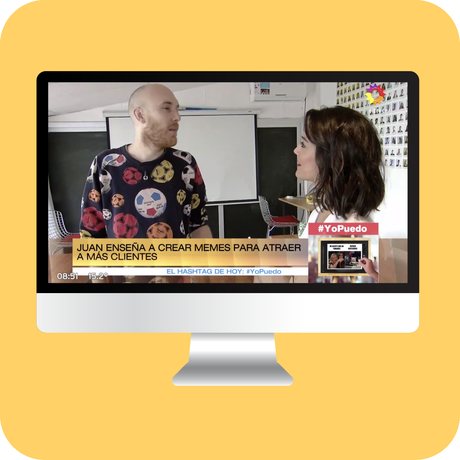
Creative work lives or dies on whether the insight underneath it is true. That is the hardest thing to teach and the slowest thing to assess — a campaign takes months to find out. A meme takes minutes. It is an insight compressed to its smallest publishable unit, and if the insight is wrong it dies in public immediately, in front of the student who wrote it. The harshest feedback loop in creative work, and it costs nothing to run.
So I built the teaching around it. Then the method became the story. National television, news radio and the country's largest daily all ran it, and the coverage renamed the school: no longer a digital marketing school, but the internet school — the one where they teach memes.
Television appearances · compiled reel
Studio panels, interviews, campaign analysis, and a prime-time format where creatives were handed live briefs and had to solve them on air. Different channels, different years, different subjects. All in Spanish — the rooms and the formats read clearly enough without it.







Fourteen appearances · click any tile to open it
Television, radio and national press, 2014–2023. Arrow keys move through them once open.
I have been making video since 2004. In 2012 one of them went global — friends throwing stones with their wrong hand — three million views, picked up by BuzzFeed and fifty other sites, and Discovery UK bought the broadcast rights. Between 2020 and 2024 I built an audience explaining Argentine economics in plain language, and more than fifteen of those videos passed a million views. One of them explained inflation to my thirteen-year-old niece using candy and coins on a table. That is the one the national press picked up.
In 2025 I started again in the Netherlands, under my own name, about emigrating and about living here. One video, about collecting furniture off the street, reached ten million. Along the way I became an influencer without ever setting out to be one, and brands started paying for it — a campaign I wrote and produced for Western Union reached 4.5M views and became one of the most-watched posts on the brand's own Argentine feed.
What the people who worked with me say



Twenty invitations, four networks, and a nickname I never asked for. Recognition I did not have to buy.